Dinner, Pasta
Remove the skin from the guanciale while trying not to remove too much fat. Leave the peppery outer crust then slice the guanciale into thin strips, keeping that balance of fat-meat-fat in every piece.
Bring a large pot of water to a boil and add 1 tbsp of salt. Add the spaghetti and gently push it into the water. Stir during the first minute, then stir again after about 3 minutes so the pasta does not stick to the bottom. Cook according to packet instructions until al dente.
Place a large fry pan on medium-low heat and add the guanciale. Let it cook slowly for about 7 minutes, stirring after the first 2 minutes as the fat begins to melt and create its own delicious oil.
While the pasta and guanciale cook, crack the eggs into a bowl and whisk gently using a fork. Add half of the Pecorino Romano and mix again until smooth and slightly runny. Finish with plenty of freshly cracked black pepper.
Once the pasta is cooked al dente, switch off the heat completely under the guanciale pan. Using tongs, transfer the spaghetti straight into the pan, letting a little pasta water fall in naturally. Reserve pasta water on the side just in case you need it later.
Quickly toss the spaghetti through the guanciale oil so every strand absorbs the flavour. Pour in the cheese and egg mixture, sprinkle over a little more Pecorino Romano, then continue tossing quickly while the pan is still off the heat.
To create the old-school texture, place the pan back onto very low heat and gently mix using tongs. The eggs should become creamy with tiny soft curds, not fully scrambled and not ultra silky like modern carbonara.
Serve immediately.
Pasta alla Carbonara
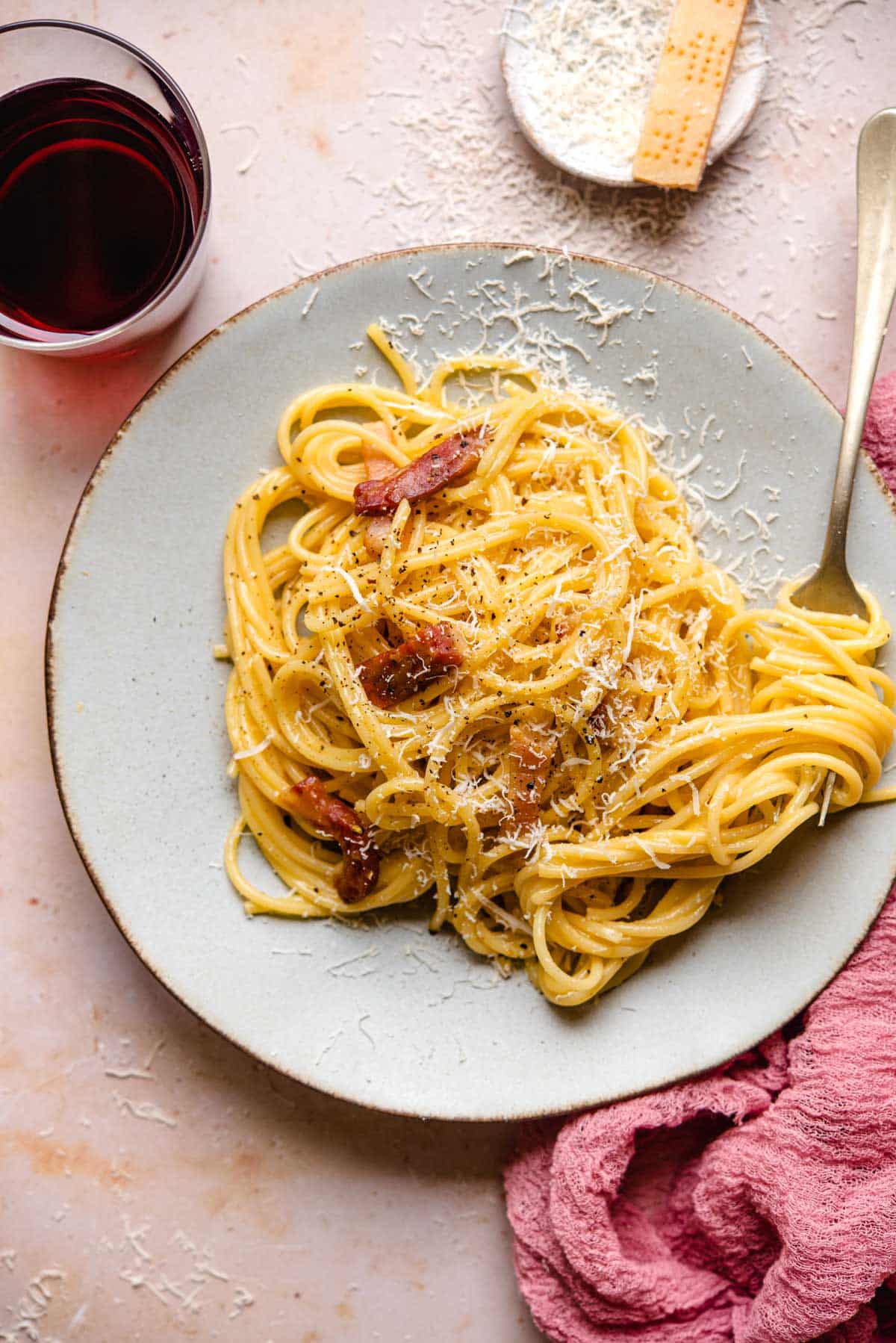
Carbonara is a classic Italian pasta dish from the Lazio region, known for its creamy sauce made from eggs, hard cheese (Pecorino Romano or Parmesan), cured pork (guanciale or pancetta), and black pepper, with no cream used in traditional recipes. The hot pasta cooks the eggs and melts the cheese, creating a silky sauce, while the rendered pork fat adds richness.
Prep: 10 mins
Cook: 15 mins